The Congregational Consulting Group, organized in 2014 by former consultants of the Alban Institute, is a network of independent consultants. We publish PERSPECTIVES for Congregational Leaders—thoughts on topics of interest to leaders of congregations and other purpose-driven organizations. —  Dan Hotchkiss, editor

Healing Is Never a Solo Performance

Woman leaning in a window
Marcos Paulo Prado on Unsplash

“Healing is never a solo performance.” This is the conclusion of Gavin Francis, citing psychotherapist Jerome Frank. It is also my most recent experience of the God in whom I do not fully believe.

About a year ago, I posted a Perspectives article about my struggles with belief. In the article, I admitted that, for the last ten years, I had been a Christian minister who mostly did not believe in God, though I had heard God’s voice or felt God’s presence at multiple times in my life, an experience that had hinted at healing.

Read more

What I Love About Interim Ministry

Round Icons on Unsplash

People have lots of questions about interim ministry—is it really necessary, how long should it last, what should the focus be? As an unintentional practitioner at both the judicatory and congregational levels (which means that I got coopted to do the work rather than seeking it out), I want to approach the subject differently: What do I love about an interim’s life?

Read more

Is Anyone Making Decisions?

Brett Jordan on Unsplash

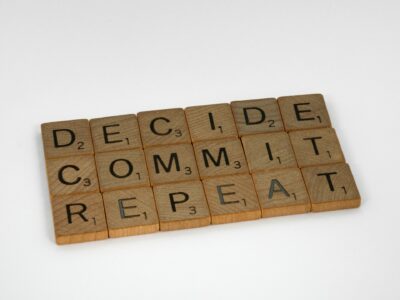
Too many congregations, presbyteries, dioceses, conferences, etc. spend enormous amounts of energy studying, debating, amending, revising, discussing, pondering decisions rather than making decisions. It is one of the reasons the millennials and Gen Zers don’t want to get involved in the church: They want to change the world, not discuss it to death. We need to demand that leaders make decisions.


Read more

Being Clergy Today, Part 2: The Opportunities

clergy collar on a table
James Ogley on Flickr (CC BY-SA 2.0)

In my fifty years of ministry, I have never seen so many opportunities for the church and clergy as I see today. Indeed, I am jealous of those of you who have the opportunity to pastor in the current environment. My belief in the opportunities in no way discounts or downplays the huge challenges to ministry today. I detailed some of those challenges in Part 1 of this two-part piece. But in this time of instability, the church is ready for innovation.

Read more

Being Clergy Today, Part 1: The Challenges

James Ogley on Flickr (CC BY-SA 2.0)

It is no secret that a growing number of clergy are leaving the vocation. In this regard, the church is following trends in the secular world where “The Great Resignation” has been going on since Covid appeared (and probably even before then). Though the trend may be slowing, as articles in the New York Times and elsewhere detail, tens of millions of people in the U.S. have changed jobs over the last two years alone.

For clergy, many factors, including the high stress of the Covid period, drive decisions to leave the profession. Most clergy enjoy interaction with people in general, and their congregants specifically. During Covid, such interaction was limited. Especially for those uncomfortable using technology for virtual conversations and meetings, it was a very tough time, causing many clergy to question their calling.

Read more

Know-how and Decide-what

It is a truth all but universally acknowledged—especially in small congregations—that whoever does the work should call the shots. Musicians are responsible for music, educators manage children’s programs, activists organize for social change. In the chancel, everyone defers to the altar guild. The underlying principle is clear: “Those with know-how should decide-how!”

But sometimes we go even further and let people who know how also decide what the congregation should be trying to accomplish. I want to propose an improved rule: “Those with know-how should decide-how, but everyone should have a voice when we decide-what.”

Read more

Craft and Creativity in Ministry

The world has changed—perhaps you’ve heard!—and congregations must adapt in order to thrive in the future. I agree, but want to add that adaptation requires creativity, and the seedbed of creativity is craft—attention to the basics handed down to us through time.

Preaching, teaching, pastoral care, administration—the craft of parish ministry covers a wide gamut. Few of us excel across the board; all of us depend on others to supply what we cannot. The craft of ministry is ancient, though the specifics vary across time, geography, and faith traditions. Craft is a way of doing things rooted in the past—but without craft, how can we tackle future opportunities? To flourish long-term, leaders need to walk the paradox of craft and creativity. 

Read more